

Have you ever had an idea for making something just stick in your head? The more you try to ignore it or put it off, the more it just sits there, begging to be made. We had one of those ideas. Until we finally made it happen and wrote it up right here. By the time you finish reading this post, maybe it will haunt you, too, until you taste it for yourself….
If you have not yet cooked the Asian sticky ribs or the pork belly burnt ends we made earlier, you might not fully understand how strong the urge has been to combine the two ideas into one spectacular recipe. The seasoning and sauce from the sticky ribs, the multi-stage cooking method from the burnt ends … even as I type this, my mouth begins to water and my fingers start to twitch. The idea of it. Why deny ourselves? We broke out our Smoke™ 2-channel alarm thermometer and some charcoal and made up a batch. And let me tell you what. Wow.
Pork belly burnt ends
If you’re a BBQ purist, you may look at the phrase”pork belly burnt ends” and scoff. “Not traditional!” you may say. “Heresy!” But the fact of the matter is, all BBQ has evolved and developed by breaking rules, trying new things, and breaking the rules of previous traditions.
As we explained in the other pork belly burnt ends post, though “burnt ends” traditionally refers to brisket, it is a term that is loosely enough defined that fatty, unctuous pork belly works just as well as, say, brisket point. And in many ways, you could argue that pork belly is actually better suited to burnt ends. How so? Well, for starters, it’s cheaper—usually by several dollars per pound. It also cooks faster. The even thickness of the pork belly lends itself to being cut it into cubes before cooking, which means that we get finished burnt ends in just 3–4 hours. Though I love the taste of brisket and its yummy fat, pork belly burnt ends are definitely worth a try!
The key to pork belly burnt ends is the dissolution of the connective tissue into gelatin, leaving (depending on your cut of the belly) tender meat streaked with pork fat, or rich, jiggly pork fat streaked with a little tender meat. Win/win. That dissolution happens at temperatures over 170°F (77°C), and would normally include a stall; but the small size of the cubes means the heat penetration happens quickly and there is little “sweat” to be lost to evaporative cooling in each piece. Cooking them to an internal temperature of 203°F (95°C) gets the job done. A leave-in probe thermometer is perfect for that task, and, if you have one, Smoke is perfect because, with two channels, you can monitor both the smoker temperature and the meat temp at the same time.
The method presented here of coating the meat with rub, then cooking, braising, and finally glazing can be reconstructed and reinvented in any flavor palate you like, and to great effect. Classic BBQ works very well, but this Asian version is not one that will be beaten easily.
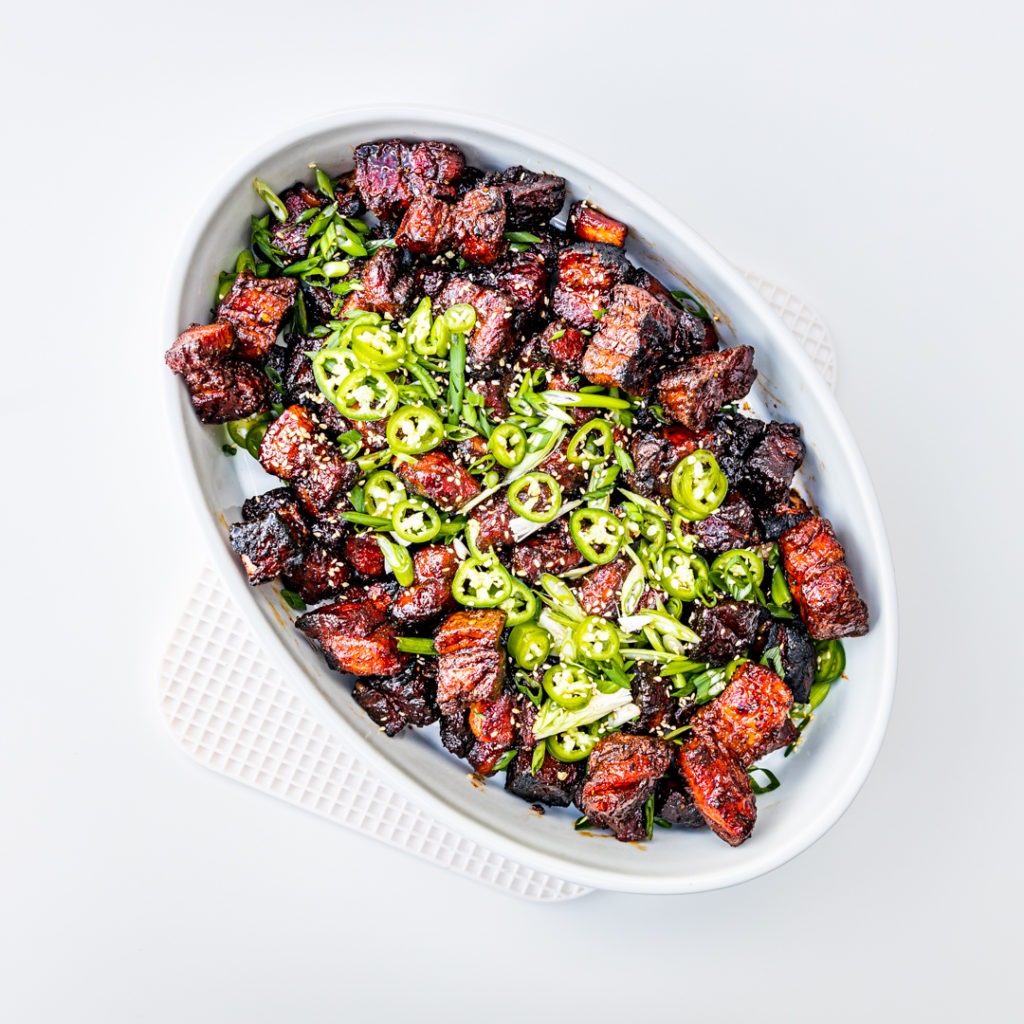
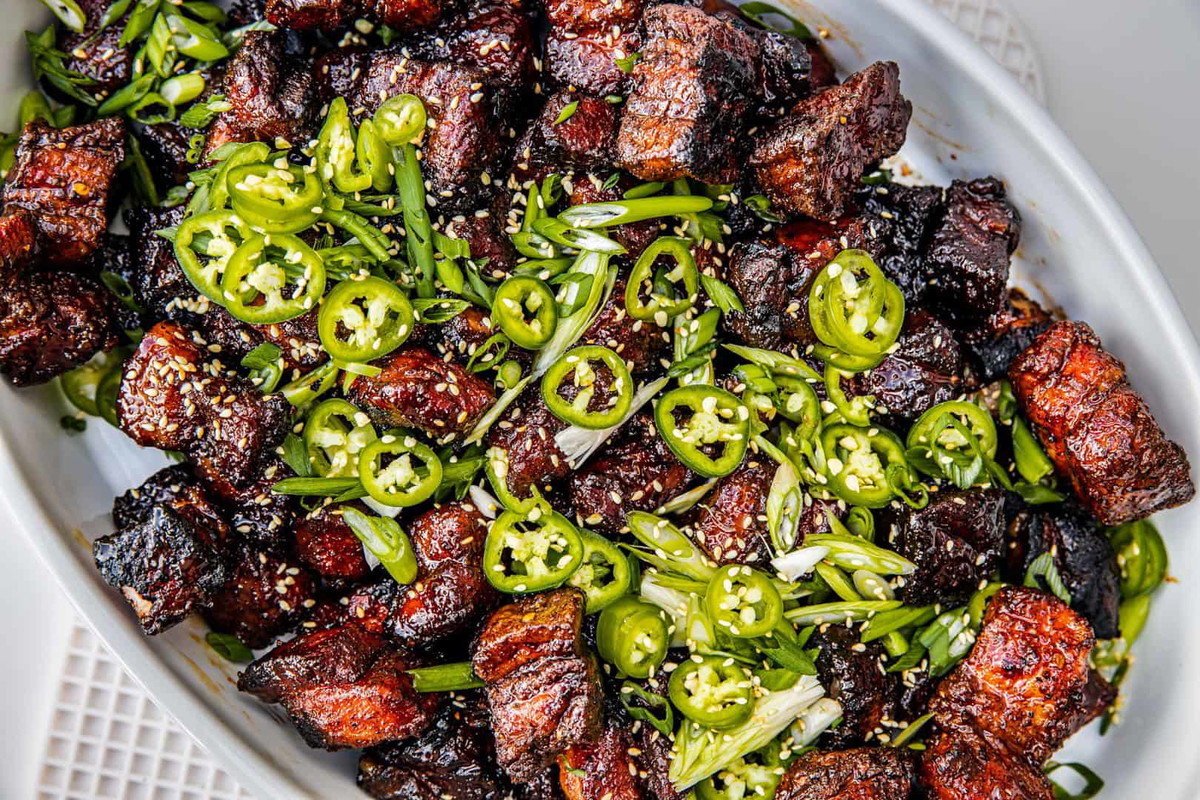
An Asian-style rub is applied, then the pork is cooked low and slow for two hours before being braised at a higher temp in soy, ginger, hoisin, and more. Then they’re glazed in a sweeter, thicker version of the braising liquid and finished by caramelizing on the grill. You will want to make them again.


0 comments