

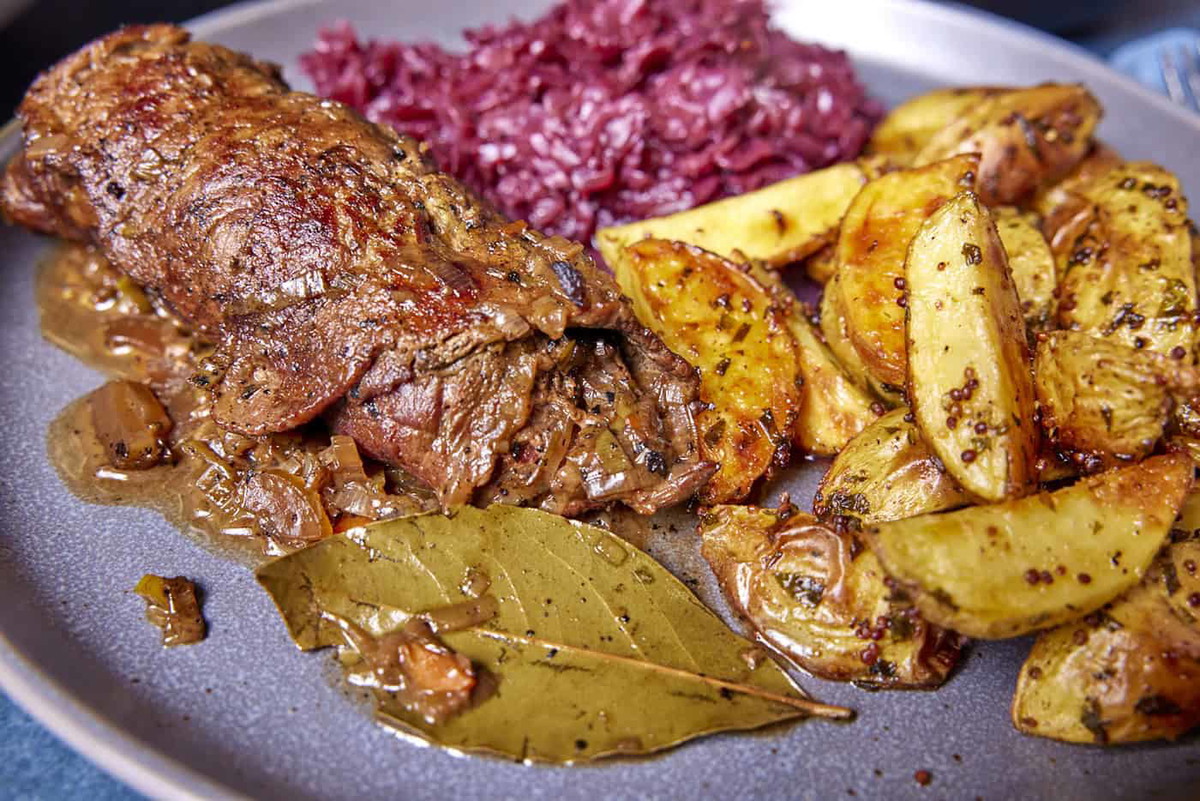
German food is meant for fall and winter. Yes, they have deliciously grillable brats, and Germans love a good ham sandwich, but the main dishes of the people are hearty, rich, and meaty. And one of the best of these is beef rouladen. “Rouladen” (the plural of roulade and pronounced roo-LAH-den) just means “rolls” in German, but the simple name belies the absolute deliciousness of the dish. It’s very, very good. It’s honest food, without flash or flair, but it hits home in the best ways possible.
This post will cover how to make rouladen and the thermal secrets to getting it right for tender, sumptuous results. Our leave-in thermometers will be key. Let’s get cooking.

The best meat for beef rouladen
This is a braised dish, not a fast-cooked steak like the pinwheels we’ve covered before. The braising time gives the flavors time to meld, mix, and deepen. But for the meat to come out tasty, not leathery, we need a cut with some connective tissue—a normally chewy cut. Top round is perfect for this. It’s not the toughest piece of meat, but it has some collagen that will enrich our sauce and lend tenderness to the finished meat roll.
You can often find top round thinly sliced and sometimes sold as “beef roulade meat,” but if not, ask your butcher to slice it for you, about 1/8″ thick.

Seasoning and rolling
Traditionally, rouladen are made with mustard, onions, bacon, and pickles; and the combo is delicious. You don’t need to mess with fancy, chefy additions, these homey ones will do just fine. Good dijon or spicy German mustard are best for smearing down the meat, and old world-style pickles are best for the filling, if you can find them. They’re a little sweeter than American-style dills, but not as sweet as bread and butter pickles. They’ll often be labeled as Polish or German style. If you can’t find them, maybe use half dills and half bread and butters.
We like big, meaty rouladen, so we use two slices of top round per roll. We lay them out and overlap them a little along their long side, then treat that as one roll. You want to season the meat at this point, so that the flavor can go throughout the whole roll. Salt and pepper, then the mustard go on. A couple strips of bacon, raw, go in, too. We cut those in half to make short pieces, then put 3–4 in there. Sliced (or diced) onion, the pickles (cut into spears or chopped) finish it off. Try to keep the toppings to one side of the meat so there’s enough unstuffed meat to close the roll with.
To roll the rouladen, roll the overlapped meats tightly around the filling, rolling the whole way down the piece. Then secure it with two toothpicks, jabbed right into the center of the roll. Boom. Rouladen.
Cooking and finish temps for rouladen
As we need some collagen breakdown in the top round (and the bacon), we want to get these rolls up to 203°F (95°C). If we don’t make it that far, they’re likely to be tough and chewy, not tender and yielding. To make sure we get to that target temperature without having to poke them over and over, we employed our ChefAlarm® with the optional 2.5″ Needle Probe. We set the high-alarm temp for the target temp and let the rolls cook, covered.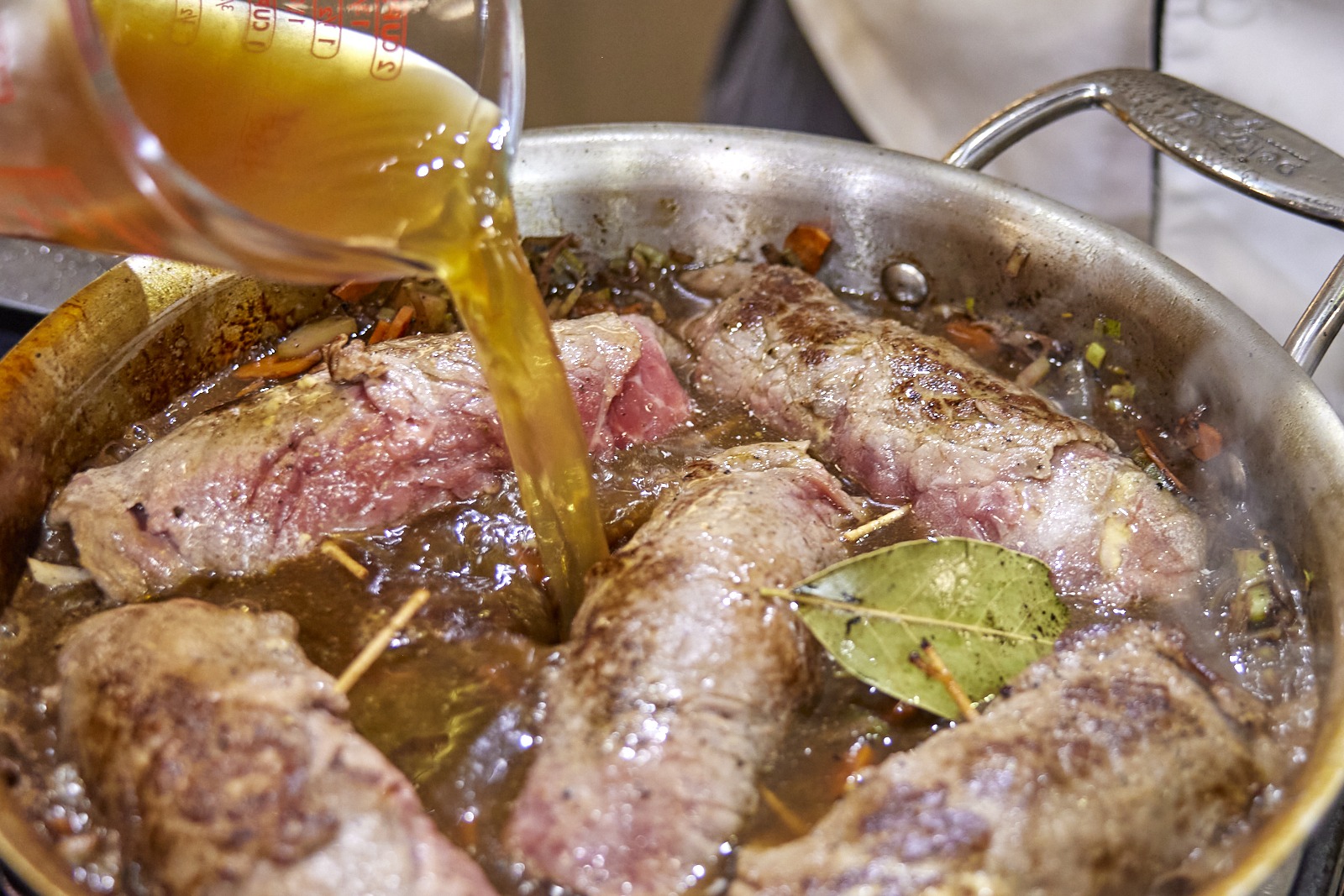
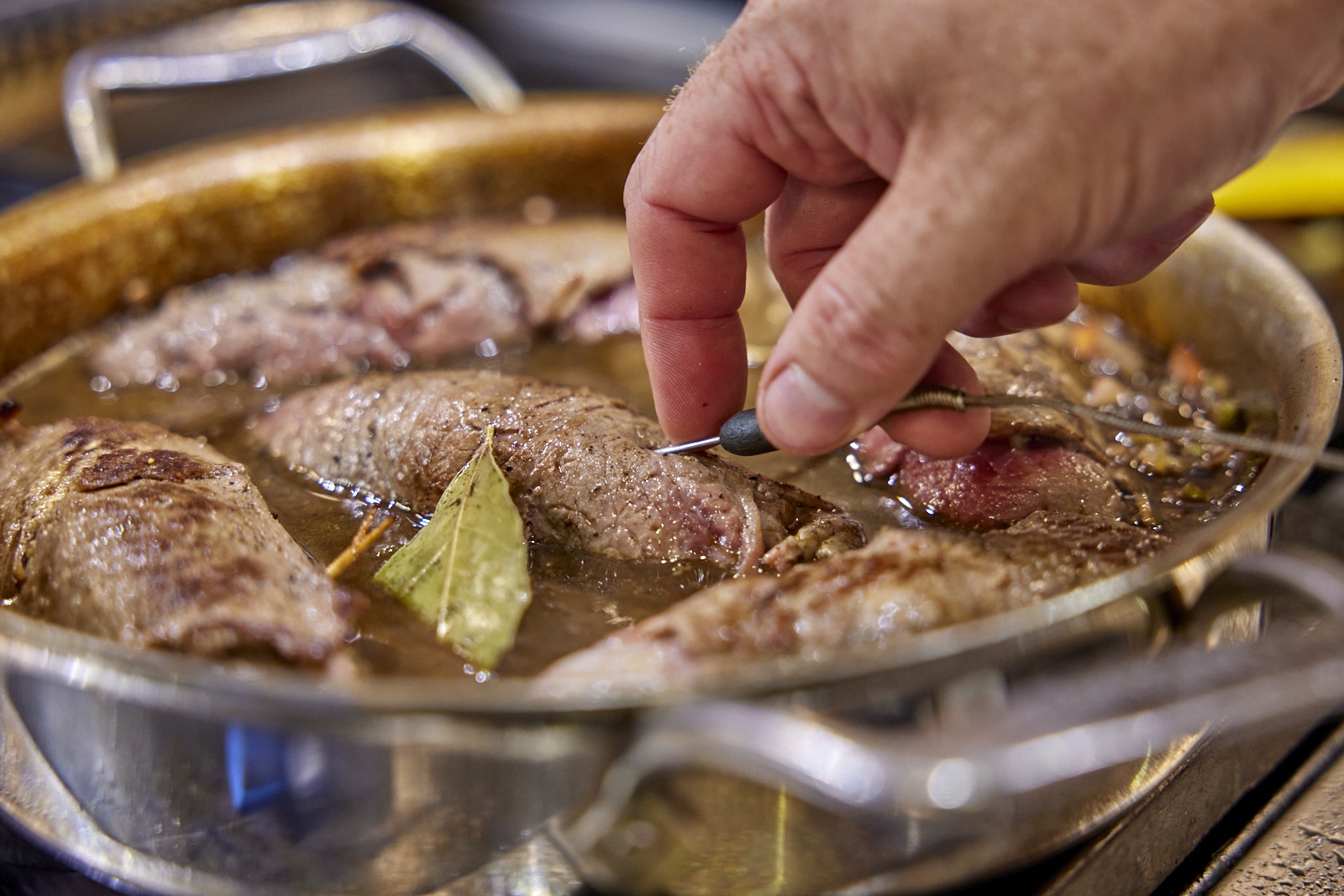
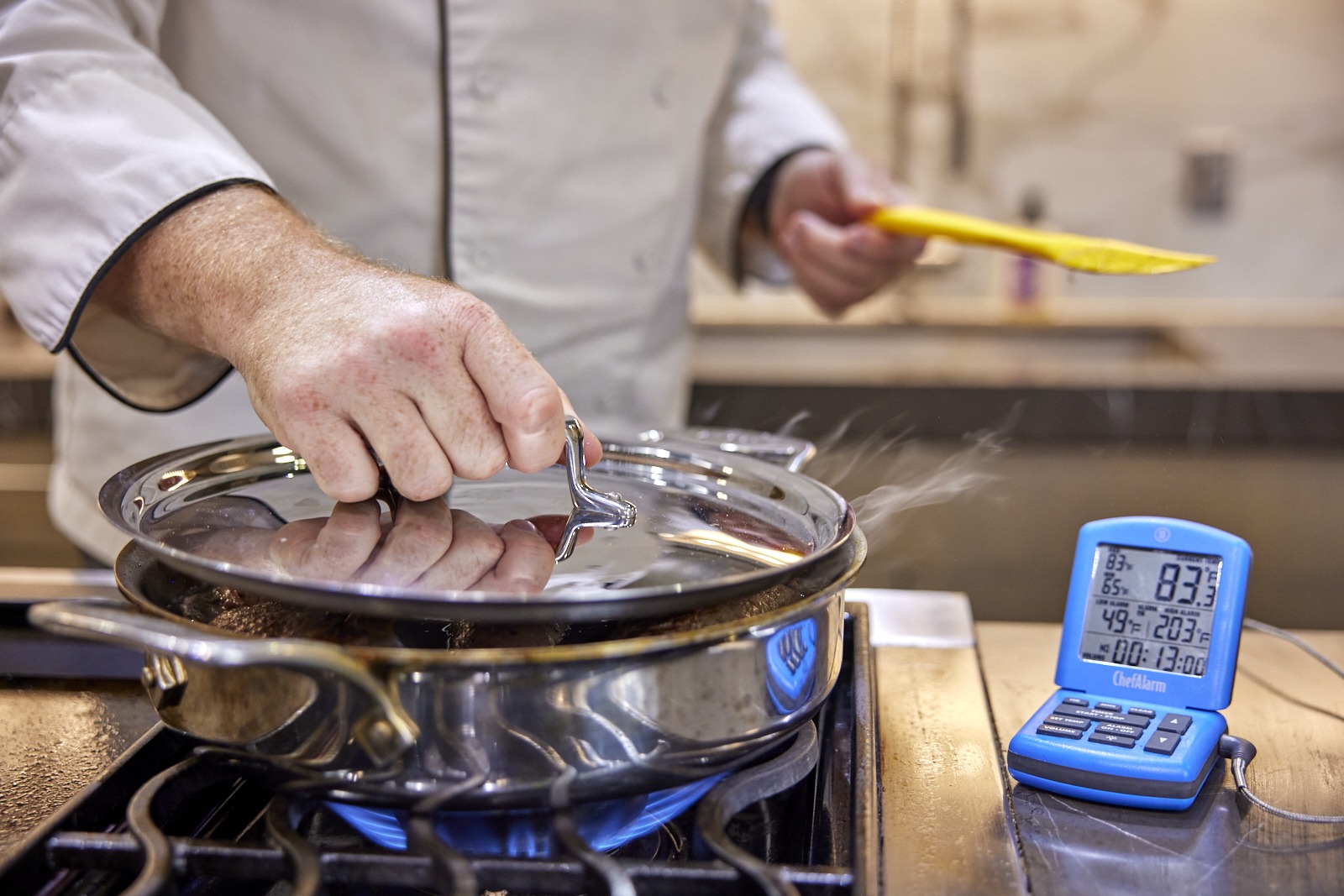
Of course, collagen breakdown is a function of both temperature AND time, so simmering the rolls up to 203°F (95°C) might not get them fork tender alone. If you verify the internal temperature with your Thermapen® ONE, as you should, and they still feel a little tough, set the timer on your ChefAlarm and cook them for another 20–30 minutes. In that time, at that temperature, the collagen should dissolve beautifully, leaving you with rouladen that will almost melt on the tongue. It should take about 80–90 minutes in total.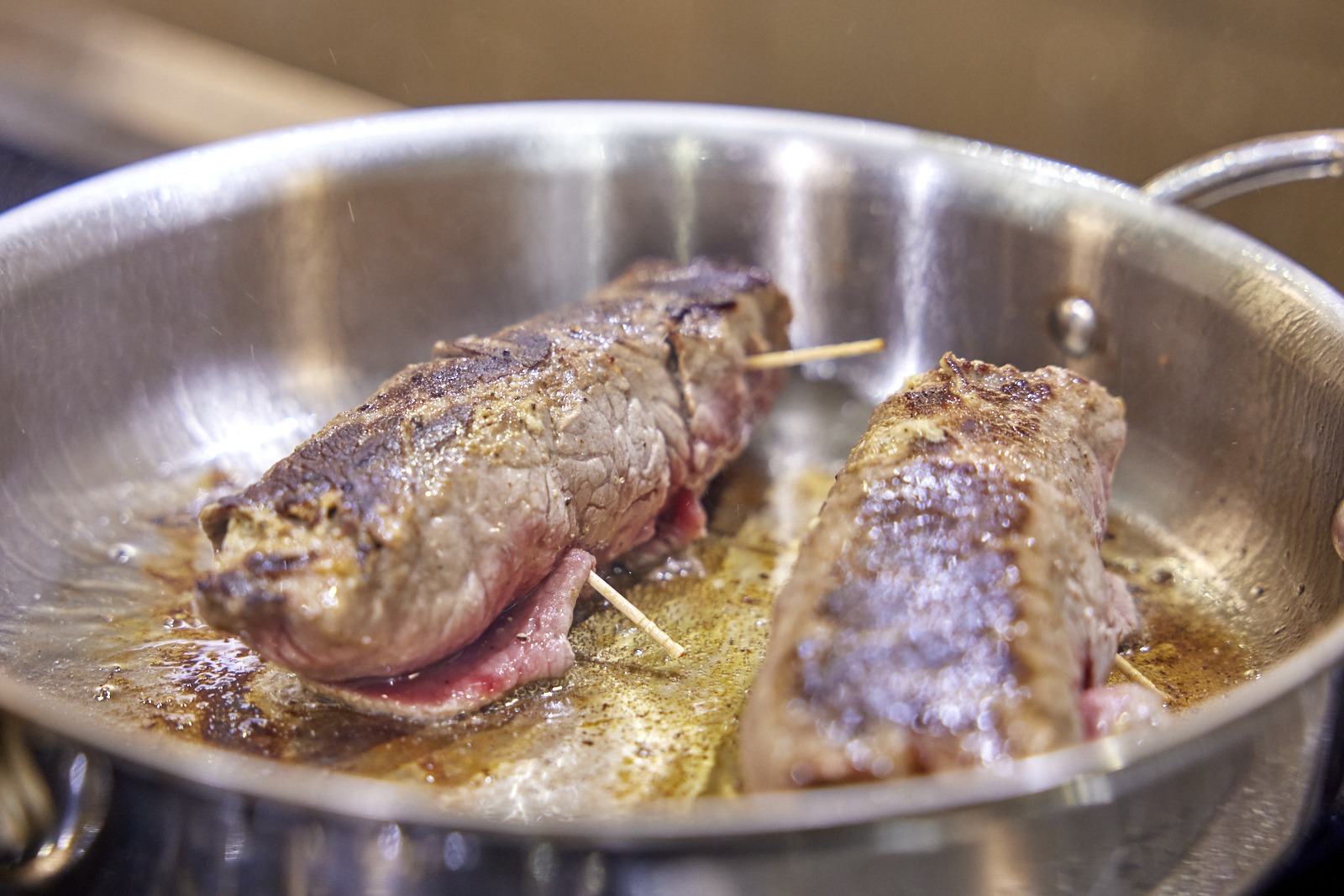
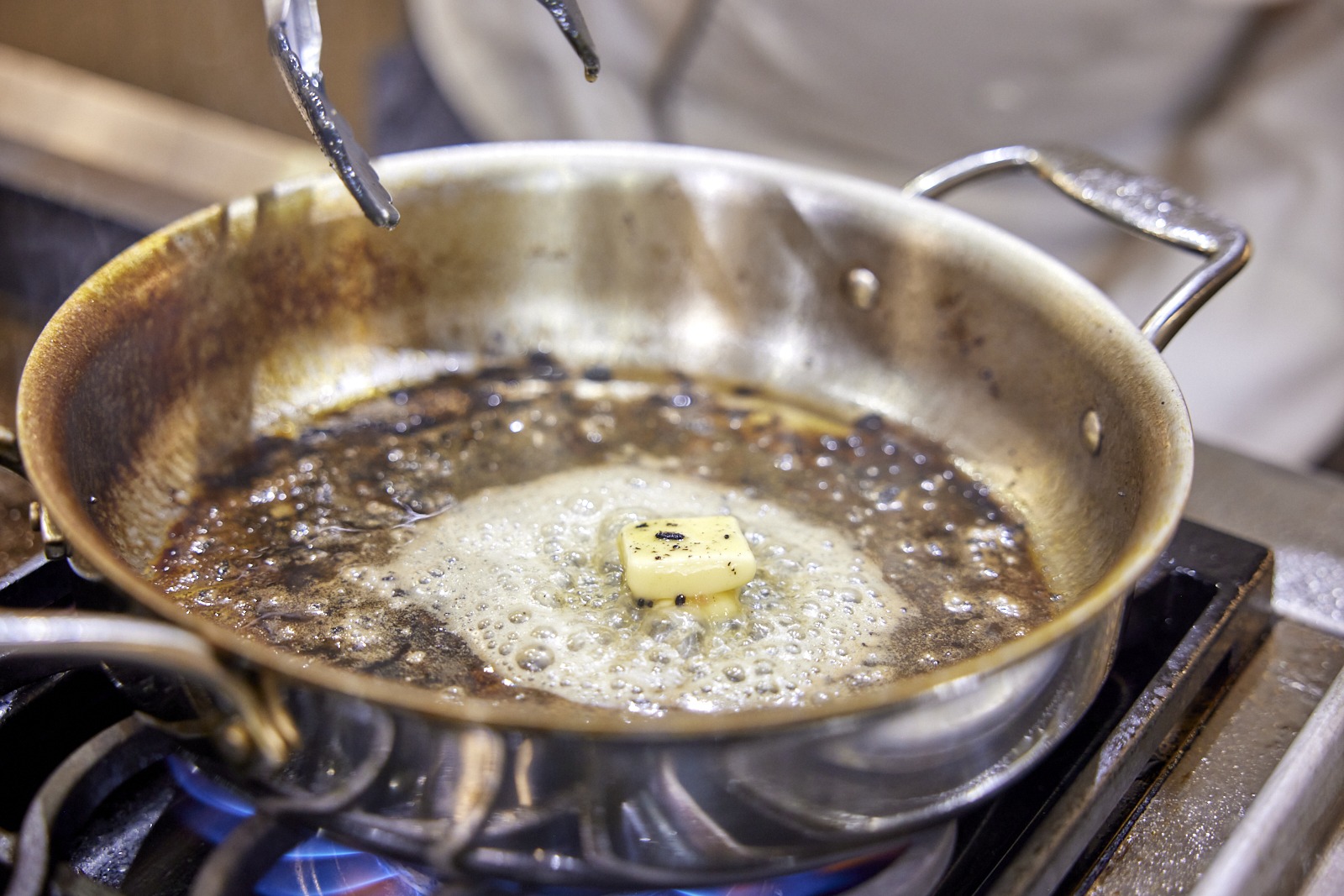
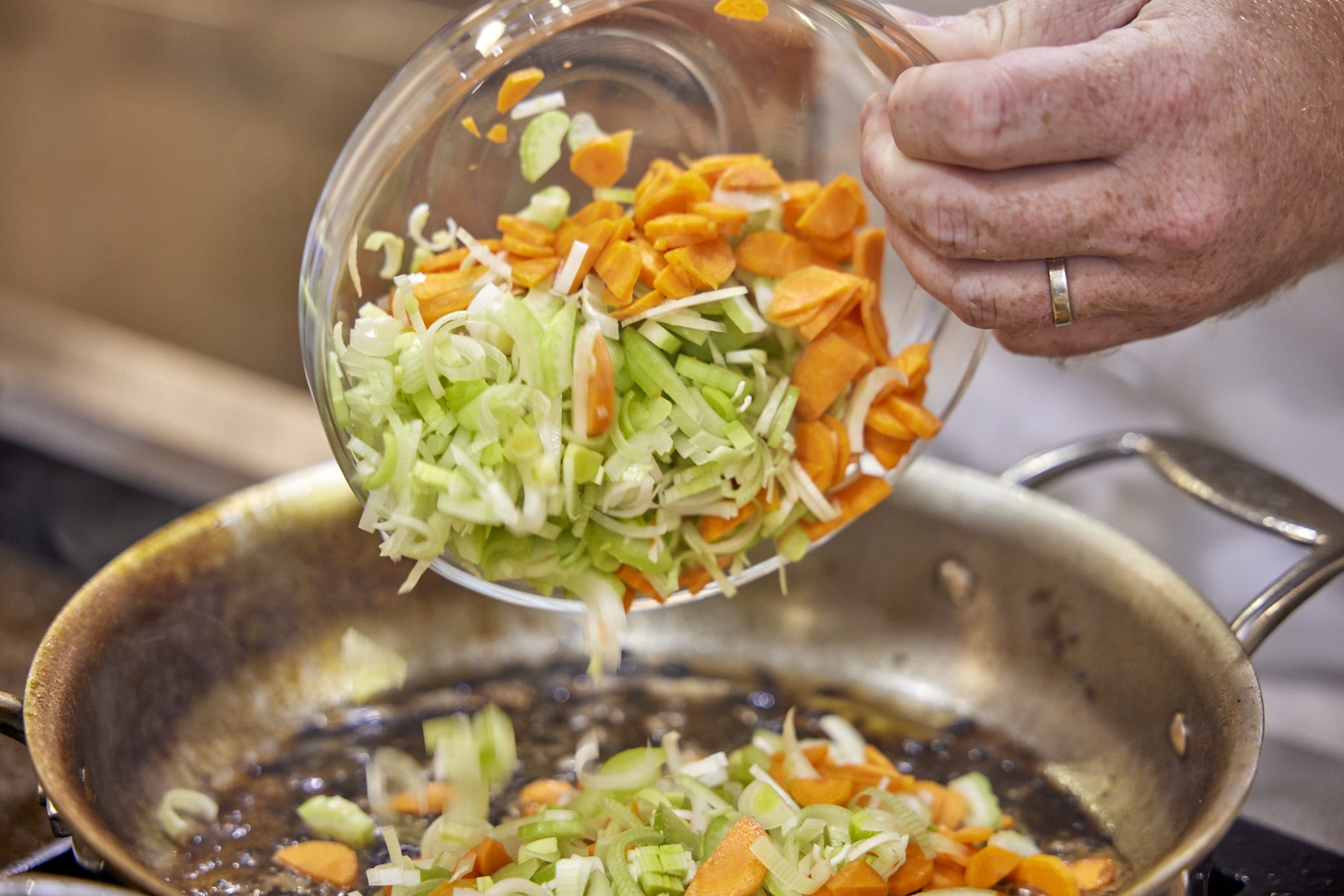
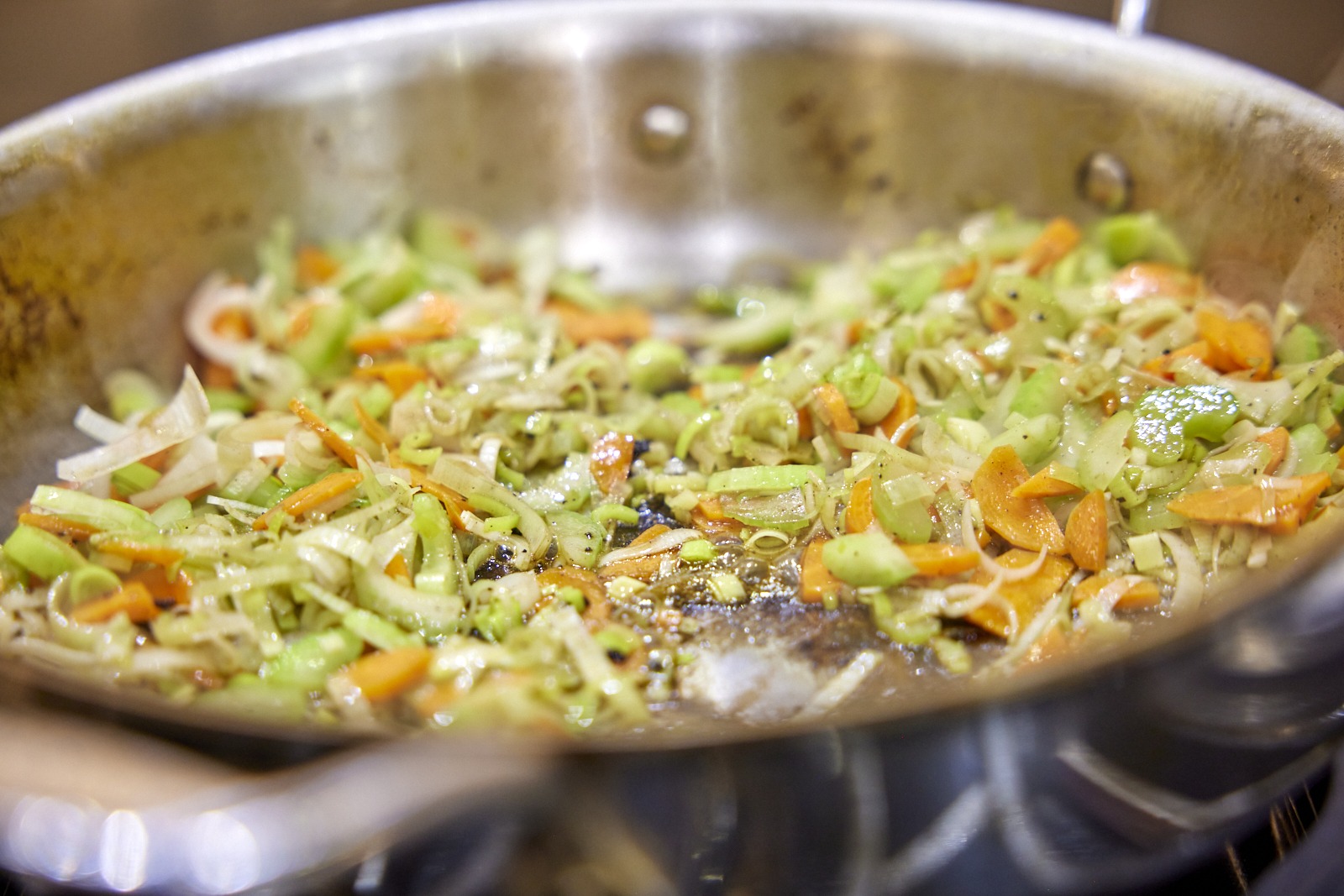
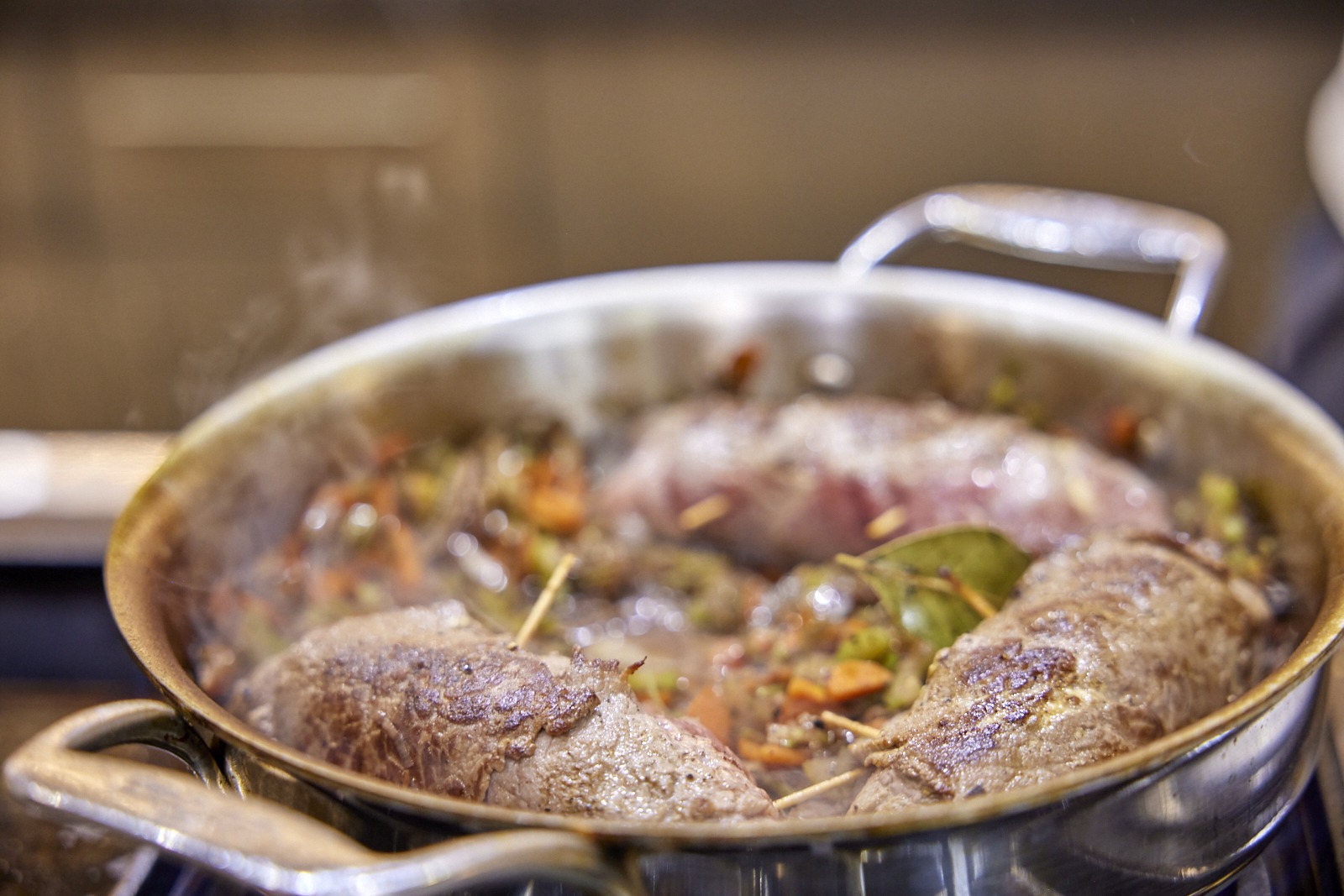
Trying to cook this dish using only time as your guide is a recipe for disappointment. Many factors can affect how the meat tenderizes during cooking, including meat breed and quality, as well as how thick it ends up after stuffing. Stove power, pan material—these all play a role in the speed at which heat is transferred from your stove to the meat, and thus how well the meat is cooked. Don’t trust to chance, use a thermometer to get this right! The results are stunningly good, especially in the cool fall and cold winter months. Give it a try this weekend and we’re pretty sure you’ll be sad you didn’t learn this recipe sooner. Happy cooking!

0 comments