

A good french fry is one of the tastiest accompaniments to any meal. Fresh grilled burger? French fries. Steak au poivre? Pommes frites, please. Carne asada tacos? Fries on the side with salsa for dipping! Yes the versatile and—dare I say—pervasive french fry has a place almost anywhere, and most particularly at your home table. Making them is not as simple as just throwing some taters in some oil. But worry not, we ahave unearthed the thermal secrets of crispy-outside, fluffy-inside, perfect fries at home.
Of course, making homemade fries from scratch is not as simple as just throwing some frozen taters in some oil. Nothing against Ore-Ida, but a truly worthy homemade french fry takes a little planning and some careful temperature control. In fact, we here at ThermoWorks are going to spend the next couple blog posts exploring the thermal secrets behind crispy-outside, fluffy-inside, perfect fries at home. We'll take a look at the thermal properties of different oils for frying and try out some innovative approaches by J. Kenji López-Alt and America's Test Kitchen.
But we're going to start today with the standard, wired-for-success method for good fries from Cook's Illustrated: double fried potato french fries. This method is basically the touchstone for any thorough discussion of homemade french fries.

What Makes a Good French Fry
Perfect fries are fluffy inside and crispy outside, with millions of micro-bubbles forming a shatterable golden crust. Improperly cooked french fries are limp, greasy, or soggy and often over-browned. These problems all arise from the improper handling of starch and sugar when exposed to high heat.
To achieve perfect french fry results, we’re going to start by rinsing our potatoes and then coat them with a light layer of cornstarch before double frying them.
Rinsing the French Fries
When I want french fries—expecially homemade ones—I want them golden and beautiful. That's why the rinsing step is important. We know potatoes are full of starch (we'll talk about how to deal with that in a minute), but they are also full of natural sugars. Starches are, in fact, composed of chains of simple sugars. As we cut the potatoes into sticks, we release some of those sugars onto the surfaces of the potato strips. If we were to fry them without first rinsing them, the sugars on the outside would caramelize in the hot oil and burn before the interior starches have had a chance to cook properly, which can result in brown, acrid-tasting and unattractive french fries.
A half-hour soak in cold water, with occasional agitation, will rinse away surface sugars, giving us time to properly cook the inside of the potatoes before the outside begins to scorch.

Double Frying French Fries
Ok, I'm going to jump ahead to the double frying here, because it just makes more sense when we're trying to understand what's happening.
We cannot just cut up some spuds and throw them into hot oil. Not according to Harold McGee!
Simple quick frying doesn’t work very well; it gives a thin delicate crust that’s quickly softened by the interior’s moisture. A crisp crust requires an initial period of gentle frying, so that the starch in the surface cells has time to dissolve from the granules into a thicker, more robust layer. - Harold McGee, On Food and Cooking, pg 304
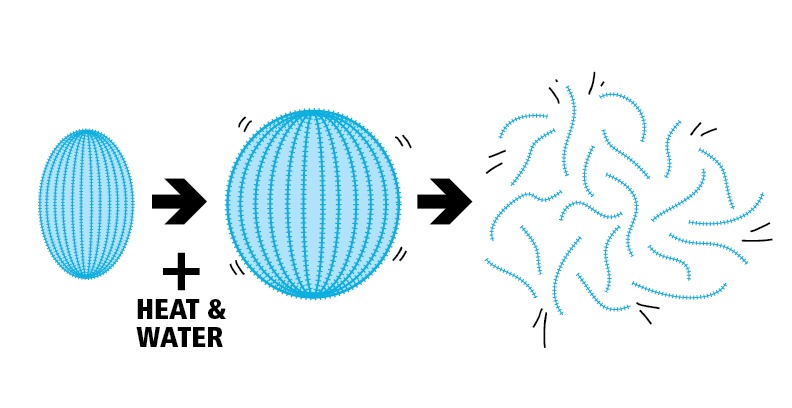
This is true of the crunchy outside, but it is also true of the fluffy inside of the french fry. If we want a perfect french fry, we need to give the potatoes’ starches a chance to gelatinize.
Starch granules, when heated in the presence of water (in this case, water from the potato itself), swell up and eventually burst into individual strands. Imagine a stack of bricks all swelling up and then exploding into goose-down pillows. This is how we get fluffy fries. The solid starch-granule bricks explode into feathery, less-dense strands. It’s also how we get the crisp on the outside: “That bursting of starch granules is essential to forming a thick crust: it’s the sticky, gelatinized starches that form the framework for the bubbly crust.” (J. Kenji López-Alt, The Food Lab, pg 90)

By double frying, we give the starches time to swell and burst before caramelizing the exterior with higher heat. We will use our ChefAlarm® leave-in probe thermometer to monitor the oil temperature and fry our potato strips the first time at a relatively low temp–325°F (163°C)–to burst the starches. Then we let them rest before frying again at a much higher heat–375°F (191°C)–to create steam. The sudden expansion steam inside the potatoes in hot, hot oil will fluff the inside and crisp the outside of our french fry.

Incidentally, this also leads us to our potato of choice: the russet. Russet potatoes are high in starch, which we need for good texture. Waxy potatoes like Yukon Gold or red varieties don’t have the starch needed to get as fluffy or crisp.
Starching the French Fries
So now that we understand the way starch acts for us in the fries, we can understand why we starch the potatoes.
When you drain the rinsing water from the potato sticks you’ll notice some potato starch settling on the bottom of the bowl. Rinsing the sugars off has also rinsed off a good deal of surface starch, and as we’ve already discussed, surface starch is necessary for a crisp, bubbly finished product. To make up for this, we toss the fries with a little bit of cornstarch, essentially replacing the potato starch we just washed away and forming a crusty film that will be hydrated by the steam escaping from the potatoes. Thus, we have both 1) eliminated bad surface sugars and 2) maintained (or even improved) the potential for a crisp french fry exterior.

Deep Frying Safety
If you have a deep fryer at home, follow the manufacturer's instructions for its use. if you are frying on a stovetop like we do here, be careful to not overfill your pot with oil. When fries are added, not only will they take up space, raising the oil level, but the bubbles of steam that will come from the fries will raise it even further. If there is too much oil in the pot, it will run up over the edges of the pot and down into the flame of your stove, creating a fireball in your kitchen.
Some manufacturers do not suggest filling your fryer more than 1/3 of the way with oil which will leave enough head space for the boil-up. the good people at Modernist Cuisine give this recommendation:
Add the oil to a deep pot, but fill it no more than half full. Generally the walls of the pot should rise at least 10 cm / 4 in above the oil so that there are no spillovers. This also helps contain splattering and makes cleanup easier. Use enough oil so that you can submerge a small batch of food completely. —Modernist Cuisine
One other step that can help is to make sure your fries have developed a good, dry-looking starchy exterior. You should dry the fries after rinsing, and then let them sit after tossing with starch to let the starch-crust form. This will also remove excess surface water, which will prevent boil ups.
Lastly, if you are worried about it, use less oil and fry in smaller batches. Filling the pot 1/3 of the way with oil will keep it at a sure-safe level, but you will need to fry fewer fries at a time.
Resources:
Cooks Illustrated Meat Book by America's Test Kitchen
On Food and Cooking by Harold McGee
The Food Lab by J. Kenji López-Alt
For more on french fries, see our other posts on this topic


0 comments