

We've fried wings. We've grilled wings. So it naturally follows that we would eventually smoke some wings, right? Well, that day has come! Here we'll discuss the advantages and difficulties of smoking chicken wings, and how those difficulties can be resolved with thermal thinking. We'll follow the cooking method from Susie Bulloch's Hey Grill Hey, and we'll be using a super savory, super easy Thai sweet chili sauce to dress the wings. Grab your thermometers and let's get going.
Why smoke chicken wings?
The answer to this question may seem obvious: smoke chicken wings for flavor. But while that is an answer that is completely true, it is also incomplete.
Smoking chicken wings allows you to do more. When frying wings, you're limited to small batches, reheating the oil and adding more time between each batch. It's a lot of frying if you're planning on serving very many people at all. But with a smoker, you can lay out pounds and pounds of wings all at once, cook them all at once, sauce them in one or more batches (if you don't have a big enough bowl for all of them) and get them all to the table while they're still hot and fresh.
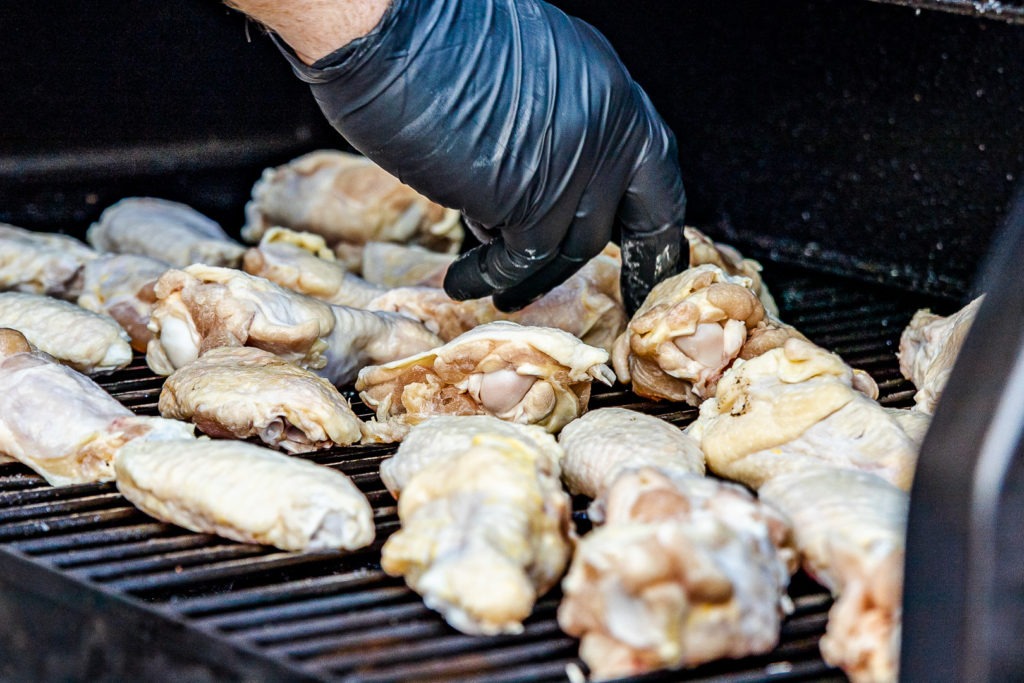
More flavor and easier cooking? Count me in.
Smoked chicken wings and rubbery skin: problems and solutions
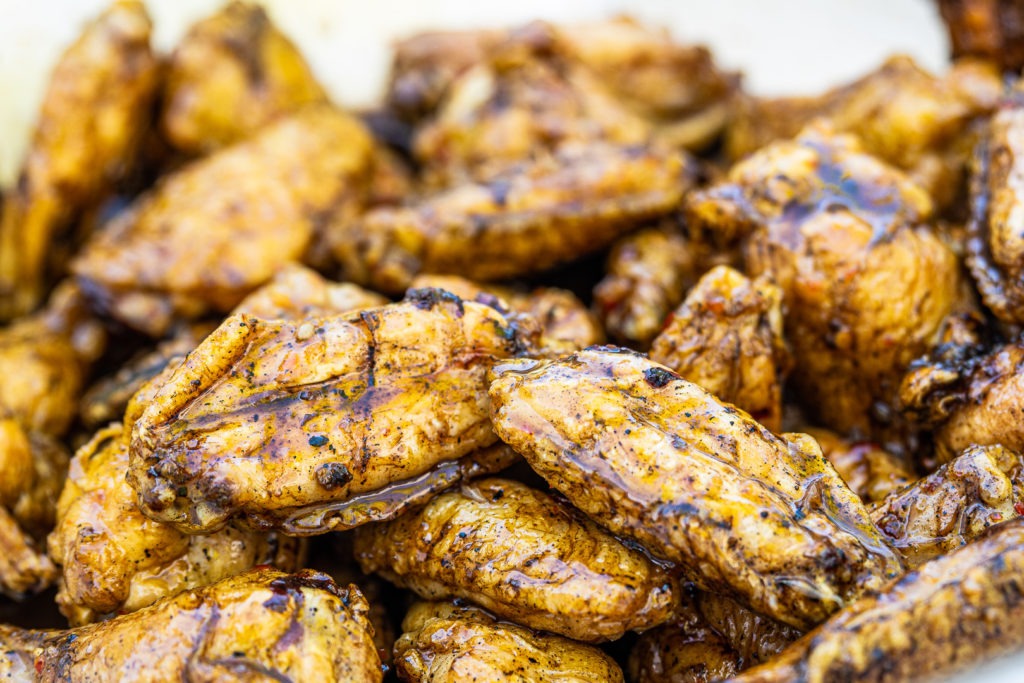
If you've ever eaten smoked chicken wings, there's a good chance that you were underwhelmed with their texture. Smoking at relatively low temperatures, like the 250°F (121°C) we recommend here, makes chicken skin rubbery, flabby and, well, gross. You need higher heat to render the fat that hides under the skin and to properly dry the water out of it—that's what frying does: dehydrate the skin so that all you have left is the protein shell that used to hold that water in place.
So what are we to do? Smoke flavor doesn't happen at higher temperatures. The answer, of course, is to cook our chicken wings in two stages: a flavoring stage and a crisping stage. Because smoke flavor penetrates into raw meat better than it does into cooked meat, the smoking cycle comes first. Cook the wings at 250°F (121°C) for 30 minutes to smoke them, then crank the heat on your smoker up to 425°F (218°C) and cook the wings until they reach 175°F (79°C) internal temp. (Wings are high in connective tissue and need to be cooked to a higher temperature than breast meat to become tender and tasty. They'll be safe at a lower temperature, but they'll be tastier at this higher temp.) The higher temperature will quickly render the fat from the chicken skin and give it that crisp bite that we all want from our chicken wings.
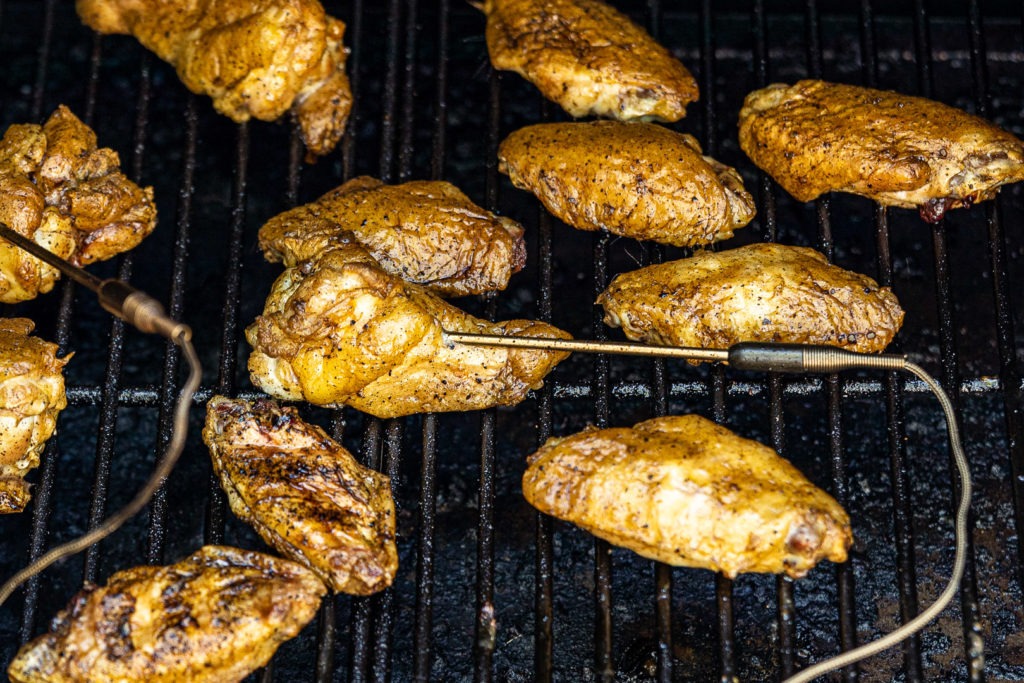
To make sure you hit that target pull temp, use a leave-in probe thermometer like ThermoWorks' Smoke X4™ inserted into two of the largest wings in different parts of the smoker.
By choosing large wings for your probes, you'll know that the smaller ones reach at least the same temperature. Probe a small wing that cooks more quickly and you'll still have undercooked large wings. And, as this kind of meat can take even higher temps than we're shooting for without drying out, it's ok if the smaller ones go hotter. By putting probes in wings on opposite ends of the cooker, you'll partially compensate for hot spots or uneven temps in the smoker.
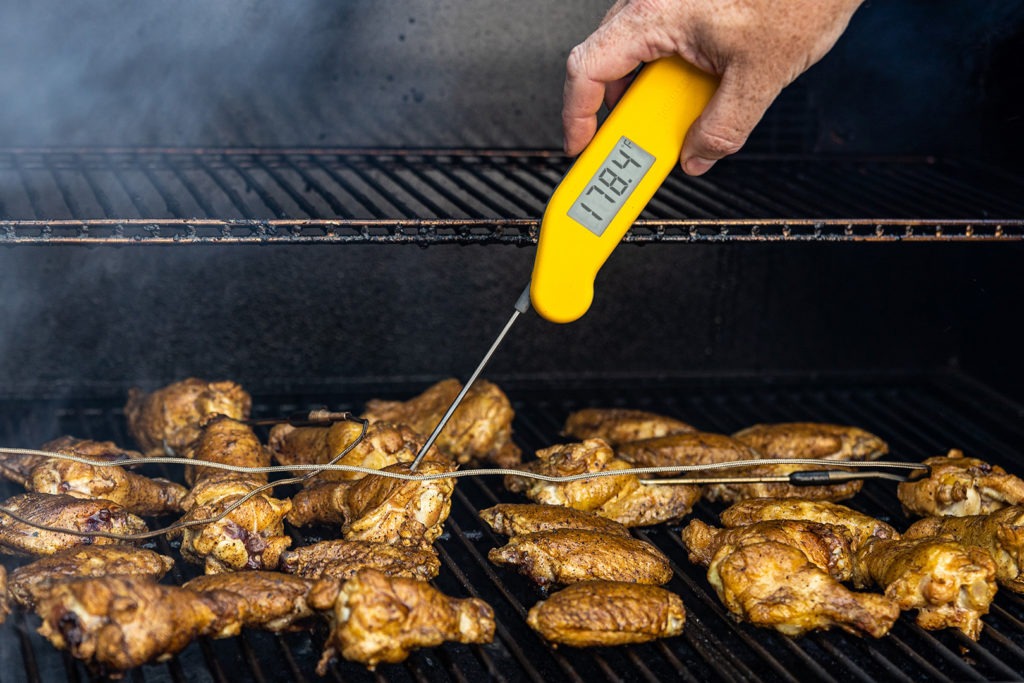
Of course, you'll still need to verify the temperature in more wings, but the speed of Thermapen® makes that easy and quick to do.
A further chicken-skin crisping cheat
There is another trick you can use to help make sure you get the crispest skin: use baking powder. Take a look at what Niki Achitoff-Gray of SeriousEats has to say about it:
Baking powder, it turns out, is good for quite a lot more than baking. The slightly alkaline mixture raises the skin's pH levels, which allows proteins to break down more efficiently, giving you crisper, more evenly browned results. Simultaneously, it combines with the bird's natural juices, forming carbon dioxide gas that leaves you with a layer of tiny bubbles. It's these bubbles that increase the skin's surface area, allowing it to develop a crunchy texture once cooked."
Niki Achitoff-Gray, SeriousEats.com
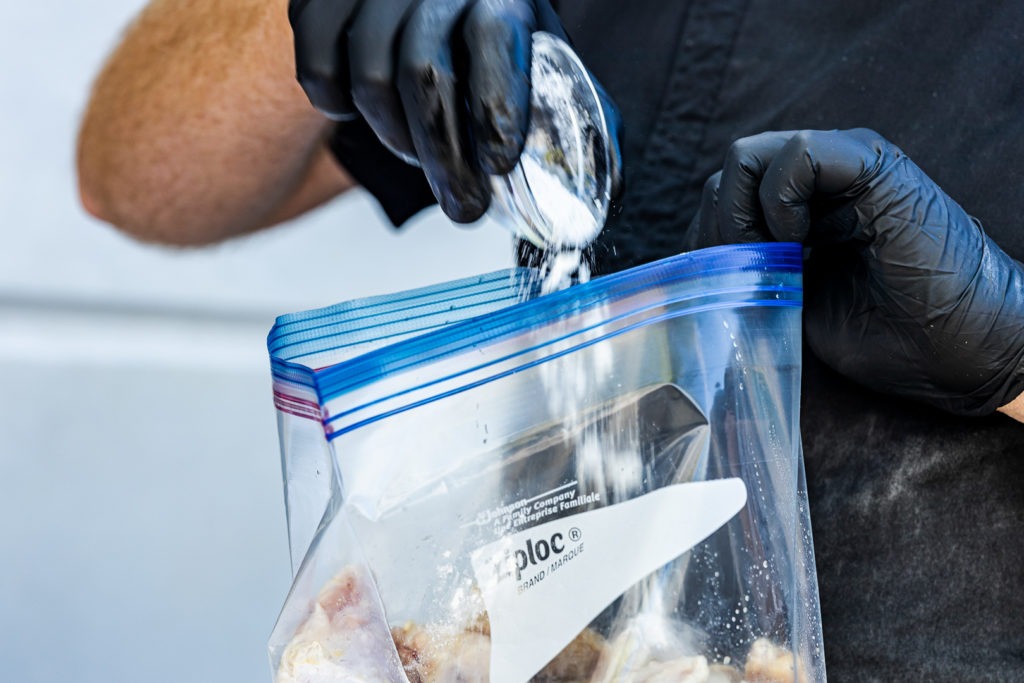
You'll get best results if you baking-powder the wings 12–24 hours before cooking, which will allow the acid and base to penetrate into the skin, so the micro-bubbles form deeper inside. But even an application right before cooking helps some.
Sweet chili sauce for chicken wings
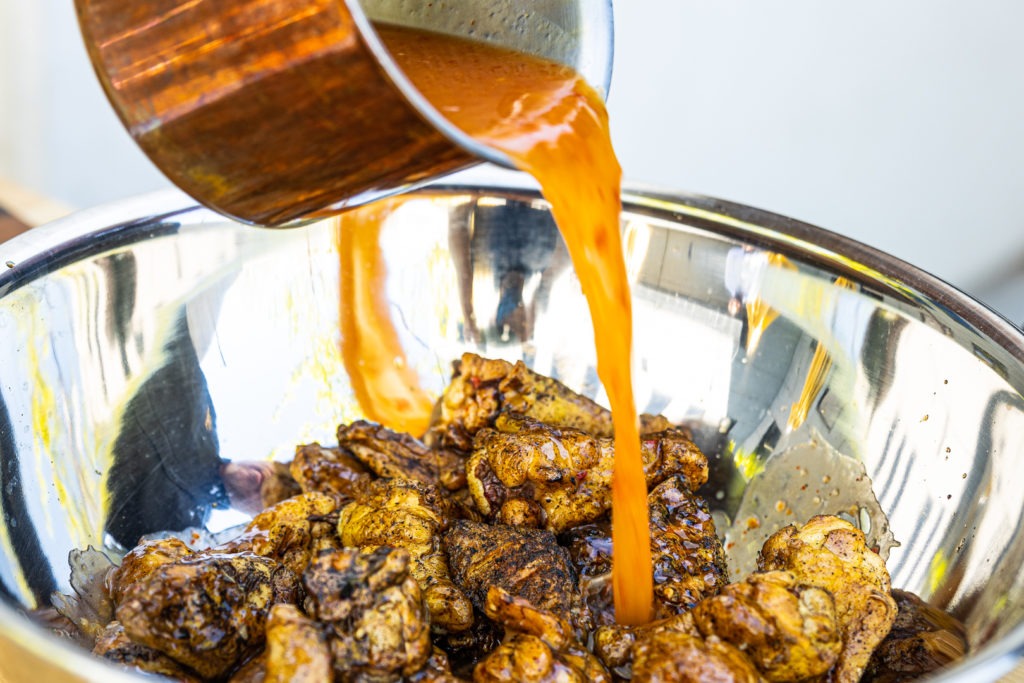
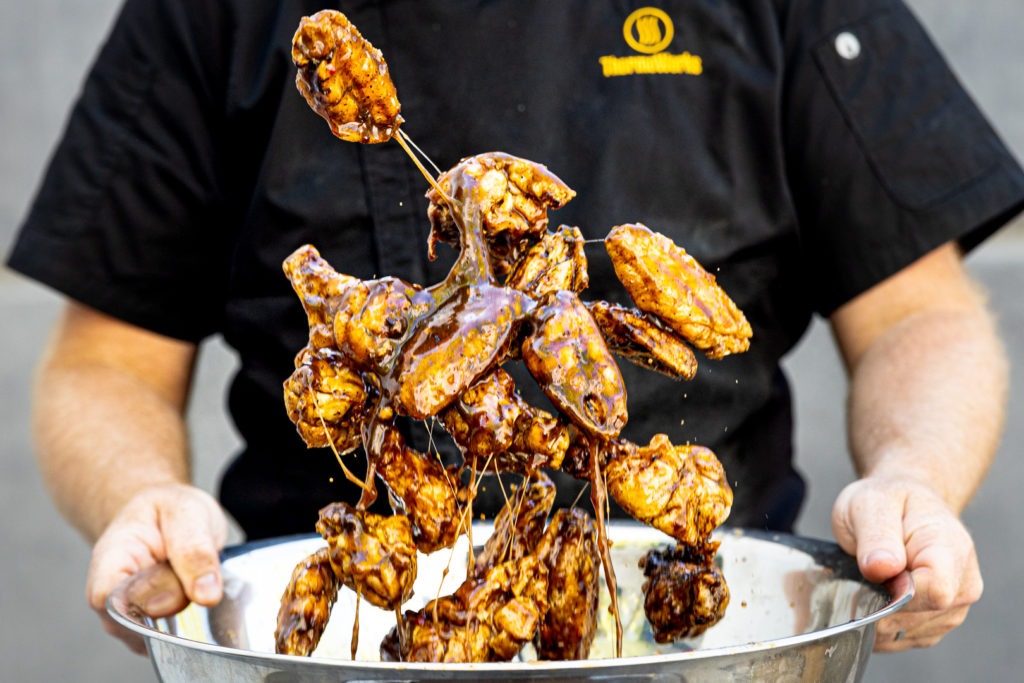
You can sauce your wings how you like, but this time we went with a delicious Thai-style sauce. It's 4 parts sweet chili sauce with 1 part each of fish sauce and fresh lime juice. (Yes, that seems like a lot of fish sauce, but trust me, it works.) We also heated our sauce to 110°F (43°C) so that we could very gently melt and emulsify some butter into it, giving it a richer consistency and flavor. In all honesty, though, I think I'd skip the butter. The brightness of the lime juice and the (good) funk of the fish sauce both feel more muted with the butter. If you're serving this to flavor weaklings, use the butter. If you like the volume of your flavor cranked a little closer to 10 (or even 11), leave the butter out. If this isn't spicy enough for you (it isn't very spicy), give the suace a squeeze of sriracha or some other chili sauce.
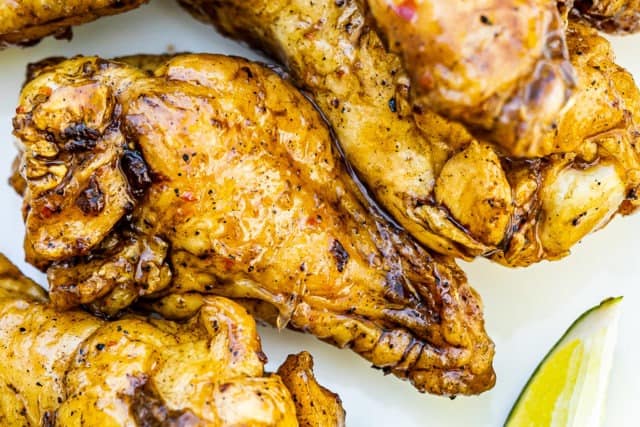
I hope you'll give this recipe a try. The smoked wings have such a good, deep flavor and their texture is excellent. It's an easy cook to do, coming in at just over an hour all told (not counting allowing the baking powder sit for 12+ hours, of course). Use Smoke X4 to monitor the temps and Thermapen to verify them and you'll have wings to be proud of. And try this sauce. Like smoked wings themselves, it's unique, it's fun, and it's a great accompaniment to summer flavors. Happy cooking.


0 comments